Artificial Intelligence is one of the fastest growing pieces of technology to date. Universities within the UK have seen an 88% rise in students submitting AI generated work, according to the Higher Education Policy Institute (HEPI).
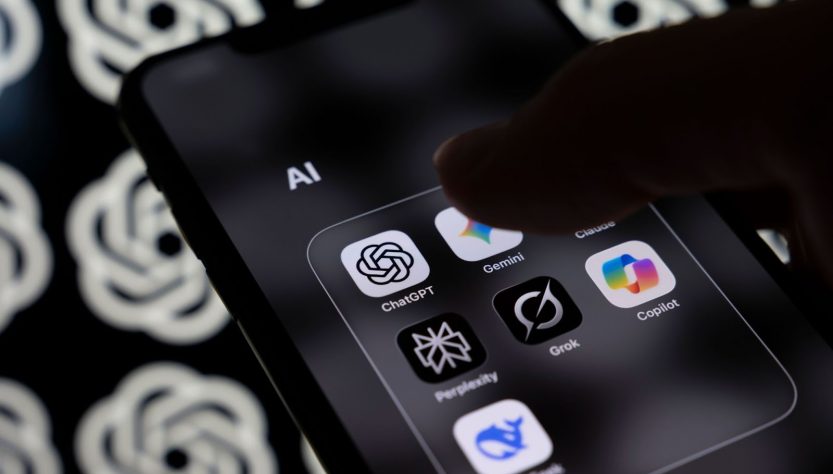
AI has been streamlined by tech companies into easy to use versions such as ChatGPT, Co-Pilot and Gemini. All it takes for people to generate their own AI text, video and media is to download an app and type a prompt.
The River polled students about their use on AI. Almost 80% of students we spoke to said that they hadn’t used AI for their coursework, while one in five students said that they had.
AI is run from data centres that need water to cool to prevent overheating, the average search on an engine like ChatGPT takes up around 30ml of water. As of 2025, AI programmes are said to be processing nearly a billion requests a day which is roughly around 30 million ml of water.
The UK’s Government Digital Sustainability Alliance (GDSA) reports that AI is predicted to lead to an increase of global water usage from 1.2 billion to 6.6 billion, which is equivalent to more than half of the UK’s current water usage.
HEPI reports that a staggering 9 in 10 undergraduate students now use AI at some capacity during their studies, despite the technology only being publicly available since 2022.
Each university in the UK has different regulations when it comes to submitting AI generated work, and the framework is still being developed due to how new the technology is.
Kingston University (KU) updated their regulations in 2025, and while AI can be used during the research process, the use of generative AI to produce submitted work is considered plagiarism and can result in academic misconduct.
KU’s consequences for academic misconduct range from capped marks to permanent expulsion, according to the University’s academic conduct.