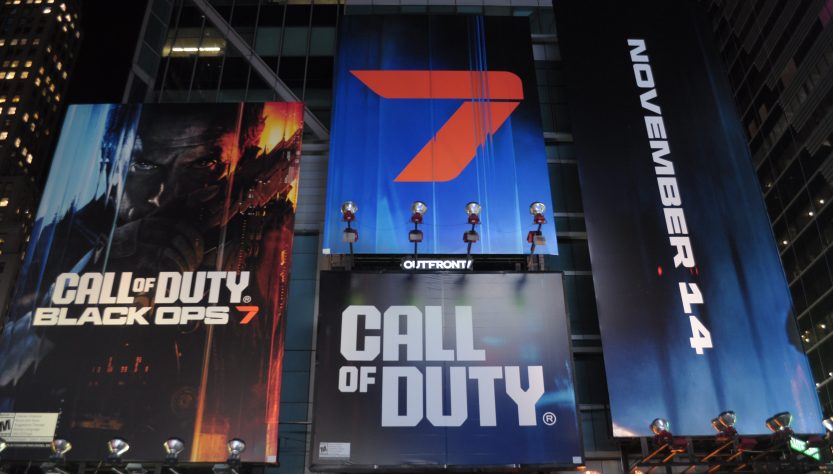
Another year, another full orbit around the sun and another Call of Duty game that fails to justify its price tag. If you’ve played any other Call of Duty in the past five years, you have more than likely already played Black Ops 7.
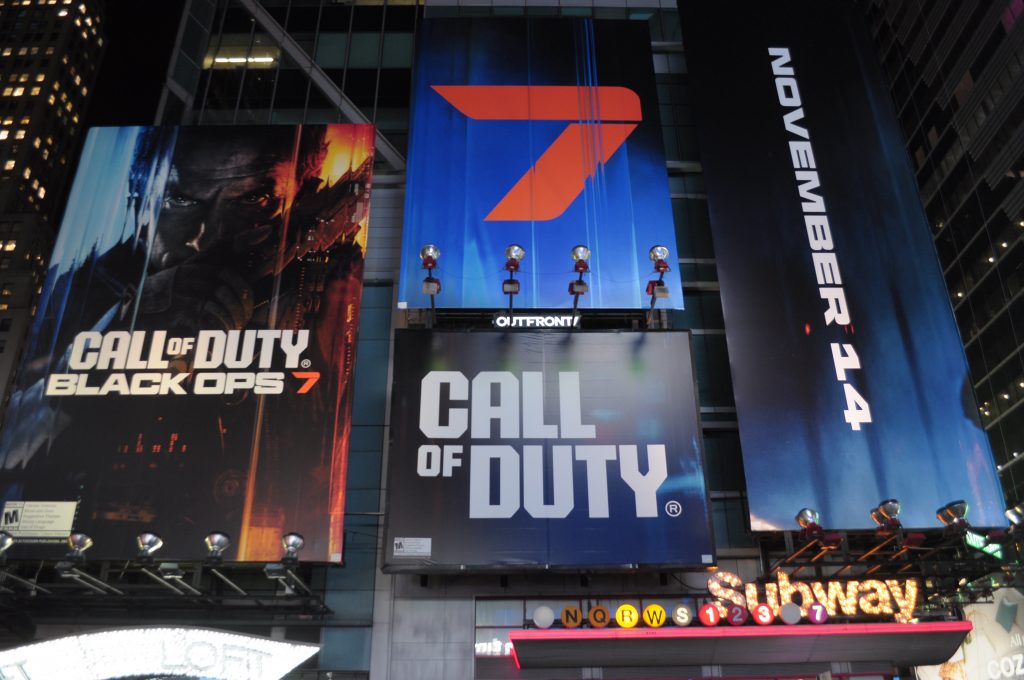
Releasing on 14 November for £69.99 on Xbox, PlayStation and PC, Black Ops 7 is the 22nd mainline title in the Call of Duty franchise.
This high-octane first-person shooter has been developed by Treyarch and published by Activision.
Campaign
Set in 2035, 10 years after the events of Black Ops 2, David Mason returns to lead a special operations team tasked with uncovering the mystery of Black Ops 2 antagonist Raul Menendez’s supposed return from the dead and his chilling threat to burn the world down in three days. What is meant to be a simple investigation into Menendez’s broadcast becomes a psychological nightmare when they uncover a weapon that can turn fear into a weapon of war, in turn, challenging the psyche of David Mason as he is forced to confront the traumatic events of Black Ops 2 and simultaneously fight off The Guild – a crime syndicate masquerading as a global tech corporation. This is all very thrilling stuff, but only on paper.
The reality is that the story falls flat on its face so hard that it’s made a dent in concrete.
The psychological challenges are materialised into levels that you’ll play through – the main issue, however, is that these stages feel awkwardly shoehorned, at best, and at worst, completely breaks any momentum in the campaign. The visions rarely lead to major plot revelations; most of them just rehash old trauma rather than driving the current conflict.
The Guild are arguably the weakest antagonists in the entire franchise. Their motives are muddled from the outset – it’s never clear whether they see themselves as protectors of humanity, a resurrected crime syndicate, or outright agents of global destabilisation. Emma Kagan, their supposed charismatic leader, is introduced with great fanfare yet quickly proves disappointingly one-dimensional. Their overarching plan, built around manufacturing fear and exploiting the resulting chaos, is painfully generic and delivered with little nuance. In the end, The Guild brings nothing genuinely new or compelling to the narrative.
The worst culprit of the campaign, however, is the gameplay. The campaign is designed from the ground up for four-player co-op, resulting in solo play often feeling empty and poorly balanced, with levels that are overly large and shallow and enemy numbers ramping up to the point where encounters become tedious rather than engaging,
ultimately undermining any sense of pacing or tactical depth. The frequent use of health-sponged, armoured enemies makes the experience feel needlessly grindy and further inflates the already overly long combat duration to a nauseating degree.
There is also a distinct lack of set-pieces that previous CoD campaigns have been known for; what happened to the snowmobile chases, the stealth missions through Chernobyl or the tactical and tense CQB scenarios in Modern Warfare (2019)? These sections, and many more, were core parts of a Call of Duty title’s identity, and even within the worst entries in the series, a good set-piece could still elevate the game to new heights.
Multiplayer
Next is the multiplayer, which serves as the primary driver of player retention until the next CoD release. Overall, it is competent but unremarkable – if you’ve played any title from the past six years, nothing here will feel revolutionary. The omni-movement system introduced in Black Ops 6, allowing players to maintain speed in all directions, returns, while the Gunsmith from Modern Warfare (2019) remains largely unchanged. Maps and weapons, similarly, feel familiar, offering a blend of recycled maps and guns with newer additions having little in the way of innovation. The only notable addition is the wall jump, which introduces a dynamic new method of traversal and can give players an edge over unsuspecting opponents. Unfortunately, this feature is severely limited by map design, with invisible walls and restricted spaces curbing the freedom it promises.
The best addition, by far, has got to be the reintroduction of 40-player modes. Unlike the standard 6v6 modes, 20v20 is chaos incarnate. This won’t be for everyone, as any semblance of structure is tossed right out of the window, but the utter absurdity and pandemonium that happens when dozens of players armed with rockets, grenades and scorestreaks cluster together is a sight to behold.
Zombies
Black Ops 7’s Zombies mode is polished but conservative. Its return to traditional round-based structure is satisfyingly nostalgic, and the primary map’s scale and atmosphere create strong early-game tension. New systems, like zone traversal and expanded progression, add depth but also bloat, sometimes disrupting the tight, contained design that made classic Zombies so replayable. While weapon feel and pacing are strong, the mode struggles to justify itself as a major evolution; much of its framework echoes its predecessor Black Ops 6, making innovation feel incremental. Solo difficulty spikes and a grind-heavy progression loop further limit accessibility. Overall, BO7 Zombies succeeds as a refined nostalgia piece but falls short of delivering a bold reinvention.
Conclusion
Ultimately, Black Ops 7 is a technically competent but creatively stagnant entry that struggles to justify its place in the franchise or its asking price.
