
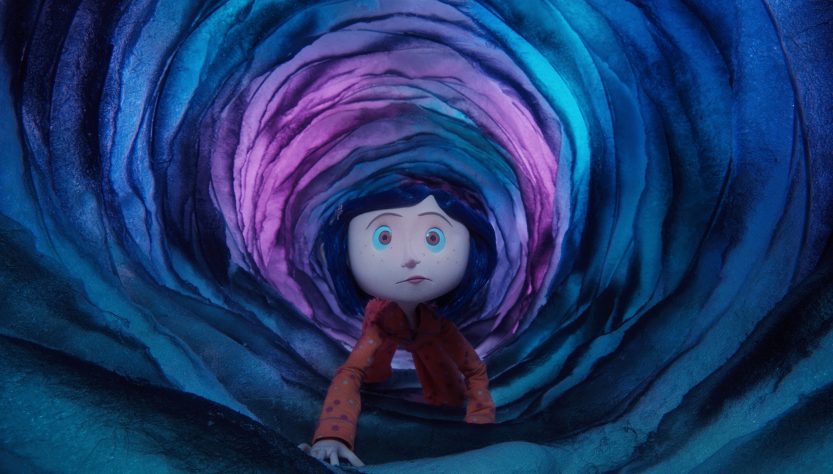
Over fifteen years ago, a little blue-haired girl crawled through a secret door and Henry Selik took the story and turned it into one of the best pieces of cinema. Released in 2009, Coraline was marketed as a children’s film, but let’s be real, it’s the type of stuff from some twisted adult therapy session. With its incredible stop-motion animation, button-eyed doppelgängers, and a villain who’s basically a spider-mum from hell, this film has aged into a cult classic. As its sweet sixteen approaches, fans are still dissecting every frame (me being one of them). So let’s dive into the theories and why Coraline feels weirdly relevant even now.
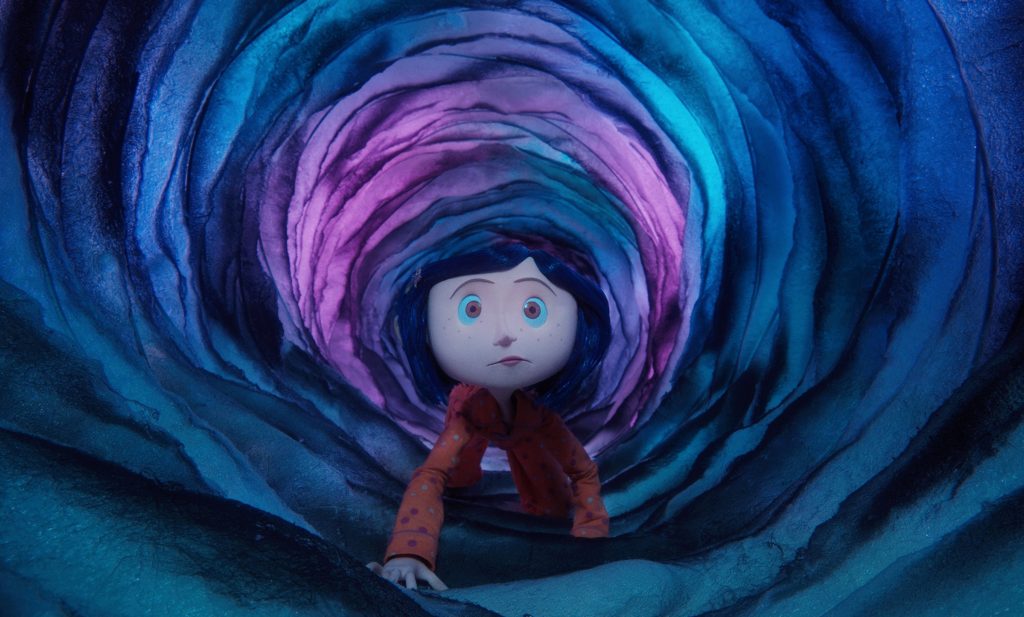
If you’ve ever Googled “Coraline theories,” you know the rabbit hole is deep. From the buttons to the cat, the theories are endless. In Coraline, everything means something. One popular fan theory suggests that the Other Mother (the Beldam) is a demon who lures children into her world to feed off their souls to live. Casual.
Another theory posits that Wybie, Coraline’s awkward friend, was added as a kind of emotional anchor, which sets a reminder for us that Coraline isn’t just battling monsters, she’s navigating loneliness and the need for connections, as hers are lacking.
The most twisted theory is that the entire Other World is a metaphor for grooming. The Beldam offers Coraline everything she wants – attention, delicious food, a perfect family – but she must give up her autonomy, and her eyes. It’s a chilling allegory for manipulation, and it hits differently in today’s age of online predators and curated social media personas.
Coraline is not your average kids’ movie. Sure, it’s animated. Sure, it stars a precocious protagonist. But there’s a reason that this isn’t a cutesy Disney movie. It’s a film where a child is lured into a parallel universe by a shape-shifting witch who wants to sew buttons into her eyes. And yet, that’s what makes it so brilliant. Coraline doesn’t talk down to us but rather, it trusts kids to handle the dark stuff: loneliness, neglect, temptation, and fear, and it trusts adults to see the deeper layers. Watch it at eight – it’s a spooky adventure. Watch it in your adult years – it’s a psychological thriller about gaslighting and the dangers of idealising perfection.
The internet has had a field day with Coraline. One popular theory suggests that the Beldam is a representation of toxic motherhood, or addiction. She gives Coraline everything she wants, but only to trap her. It’s a chilling reminder that not all that glitters is gold. Or in this case, not all that’s stitched is safe.
And then there’s the cat. Sassy, cryptic, and always one step ahead. The cat is the most interesting character to me, one I still haven’t been able to crack. Some say he’s a guardian spirit, others think he’s a former victim of the Beldam who escaped. Not much to know, but so much to see.
Its themes of identity, autonomy, and the dangers of escapism are more relevant now than ever. In a world where we curate our lives for likes and dopamine hits from digital validation, Coraline’s journey is a cautionary tale. The Other World looks perfect, but it’s a trap, sounds familiar, right? This wasn’t something we had to worry about as children in 2009, but as adults in 2025, in a world of social media, the hidden meanings in this film are more relevant now than ever. Coraline’s aesthetic has become a Gen-Z staple. From TikTok edits to button-eye makeup tutorials, it’s having its moment for sure. It’s spooky season all year round, and this film is the blueprint.
So, here’s to Coraline, a film I still don’t have all the answers to.