
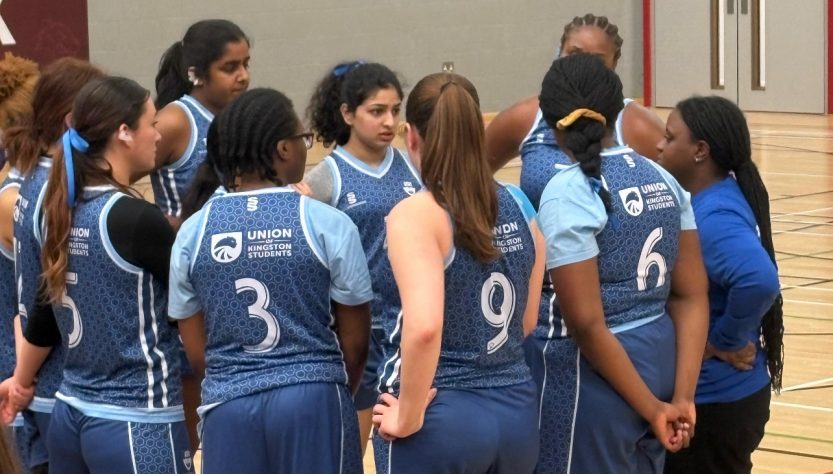
It’s Wednesday night, and the women’s basketball team is in the middle of a nervous and exciting warm-up session before a big home game. They are confident in their ability to win, but when the other team arrives with a large crowd of students from their university to cheer them on, you can tell the difference between the two sides of the court. One is lively and supportive, and the other is dead and unmotivating; no one from Kingston came to support the women’s game, which shook their confidence and made them feel unworthy.
Men’s sports tend to gain more traction than women’s sports due to a variety of pressing issues, including visibility, cultural perceptions, and stereotypes. Despite the fact that Kingston University has many women’s sports clubs, it remains difficult to attract live crowds when compared to men’s sports teams, even as national interest in women’s sports grows.
“I believe the team would perform significantly better in games if we had at least half the audience that the men’s basketball team does,” Saidat Animasaun, president of the Women’s Basketball team, stated. “I remember one Wednesday when we had a game right after the guys, so we went to support them before we played. I was surprised by the number of people there to support them. We never see numbers like this in any of our games, which was very demotivating.”
“It honestly left me feeling like maybe we aren’t as good as them, despite winning the same number of games.”
Whether we are consciously aware of the issue or not, students will most likely choose which games to attend based on subconscious, outdated, stereotypical assumptions, such as: women’s games are less intense and competitive, or simply not as entertaining and exciting as men’s games.
KU’s women’s teams train and perform just as hard as their male counterparts. Female athletes are just as committed and play at the same level as male athletes. Performance and dedication at games are not the issue; what is wrong is skewed cultural perceptions. What’s going on at Kingston is simply a smaller-scale reflection of the broader perspective on gender in sports.

“I feel like I’ve seen a pattern when it comes to differences between the men’s and women’s teams,” Eli Obukohwo, Women’s Basketball team vice president, said. “I know for the past few years, the way we would differentiate our women’s basketball from the men’s is based on how well we work together as a team, and how disciplined we all are.
“I couldn’t help but notice how there was a huge gap between our teams, and that made them lose a lot because there was no communication.
“It always made me think of how stupid these sports stereotypes are because we work just as hard and arguably even have better communication skills.”
To change the cultural perception at Kingston University, we can begin by increasing social media coverage and posting on the official Kingston University student union, and sports pages. This can help normalise support and attending games for women’s teams in the same way that men do.
