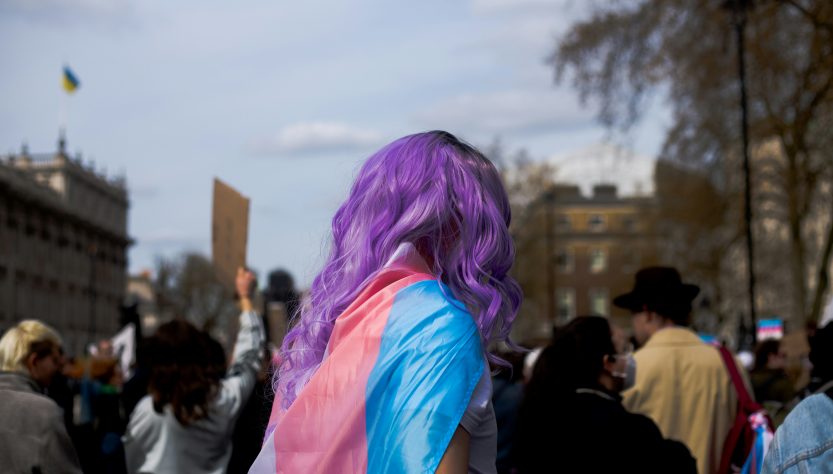
“There’s no LGB without the T,” Labour MP Nadia Whittome previously said during a parliamentary debate on the rights of LGBTQ+ individuals. It’s shocking that such an obvious statement needs to be said, yet the divide within the community, let alone the country, is blatant.
The rights of transgender individuals are on the blink of being completely stripped. Despite only taking up 0.55% of the population in the UK, the discussion of stranger’s genitals and gender identities seems to be a common topic of debate.
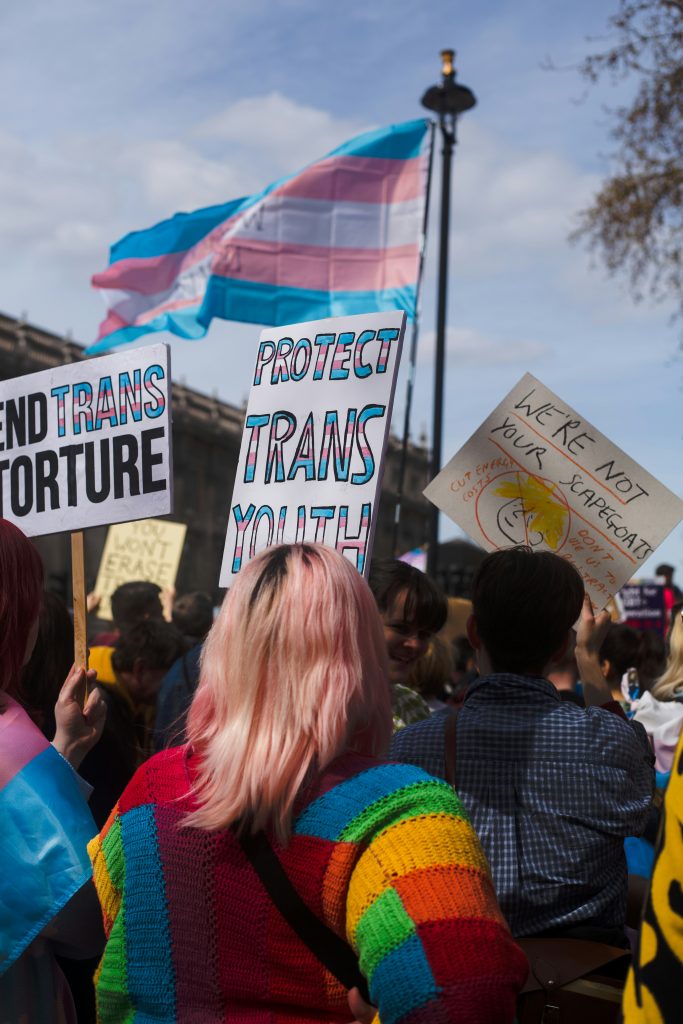
The situation reached a particularly depressing nadir last year. In April, the UK Supreme Court ruled that the sex of a person is determined by what they were assigned at birth, not their gender identity. The momentous decision has ultimately started the process of dehumanising a minority group as well as deconstructing decade’s worth of civil rights movements.
So why does a person’s biological sex matter, and how does this effect anyone else? These are questions I repeat to myself daily. As a queer man, I often find myself worried about what’s next. I couldn’t care less about who is sleeping with who and what is in their pants, and I struggle to see how dictating how someone can identify helps with anything.
Homosexuality has been legalised in England and Wales since 1967, when the Sexual Offences Act was passed and being gay was decriminalised. However, it wasn’t until 1980 that Scotland and 1981 that Northan Ireland followed suit.
Despite this, the age of consent between two same sex people was only made adjacent to heterosexual counterparts when the Sexual Offences (Amendment) Act 2000 was passed, 26 years ago. This ‘win’ for LGB individuals was heavily influenced by the work put in by transgender people, protesting endlessly to be treated with dignity and respect. Martha P Johnson was a significant transgender activist who fought for the rights of LGBT people throughout the sixties, seventies, eighties and nineties until her death in 1992.
Standing firm against harassment her work during the Stonewall riots, a series of protests that took place in New York during June 1969 after the police raided a gay bar, led to the formation of the Gay Liberation Front (GLF), a radical activist group who fought against social oppression through direct action in not only New York but Australia, Canada and the UK.
Britain’s first gay rights demonstration was held shortly after this by the GLF in November 1970 when 150 people marched Highbury Fields in London against the arrest of Louis Eakes, a gay man arrested for importuning whilst allegedly trying to find a light for his cigarette.
Although being gay in London was not an arrestable offence in the seventies, attitudes towards same sex couples and queer people were not inherently tolerated. Employers could dismiss employees on the basis that they were LGBT, services could be declined, and police intimidation was frequent. Without the unification of the LGBT community during this time, there would be no laws protecting the safety and rights of gay, bisexual, or transgender people today.
So here we are in 2026. The 2010 Equality Act helps protect people in the UK against discrimination, victimisation and harassment by ensuring a person’s workplace, housing, education, and access to services cannot be affected by their age, disability, sex, race, religion, gender reassignment or sexual orientation. However, with this new ruling transgender individuals are specifically singled out and excluded from the protected characteristic ‘sex’ and are at constant risk of being targeted.
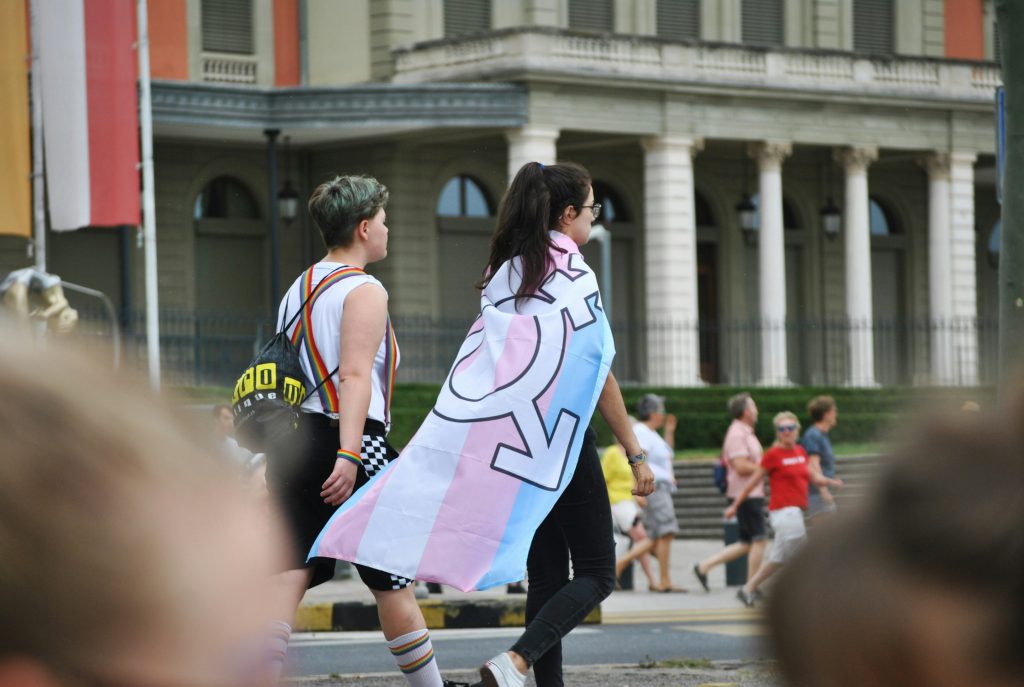
The UK Supreme Court’s decision also denies transgender people from using single sex spaces such as the public toilet that aligns with their gender identity, which is not only ethically unenforceable but impractical; there is no way to tell the sex of a person based on how they present.
It is not just transgender people who are being affected by this. Anyone who is not seen as gender conforming to the general populous can be targeted, reinforcing harmful stereotypes and continuing a cycle of repeat discrimination.
It can feel quite helpless watching the state of the country decline and it is important to stay educated and advocate for transgender people.
If you have been affected by the ruling support can be found every day from 10am-10pm on 0800 0119 100 or online at switchboard.lgbt.